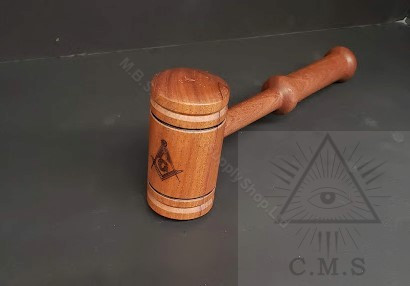
A good Masonic gavel is a tool the Worshipful Master will use at every meeting, so it pays to choose well.
The gavel is one of the most familiar objects in a Masonic lodge. It opens and closes the lodge, calls the Brethren to order and keeps the meeting moving. It's also one of the working tools, carrying a symbolic lesson for every new Mason. This guide explains how gavels are used and how to choose one.
The gavel as a working tool
In many rituals, the common gavel is among the working tools presented to the Entered Apprentice. Operative masons used a gavel to knock off the rough corners of stone, and the speculative lesson concerns shaping one's own character. That lesson is explained in the lodge.
The gavels of the principal officers
In most Canadian lodges, the Worshipful Master and the Senior and Junior Wardens each have a gavel, sometimes called a maul or mallet. They're used for the knocks that open and close the lodge, call the Brethren up or down, and mark parts of the ceremony. The Master's gavel is the symbol of his authority to govern the lodge during his year.
What makes a good lodge gavel?
- Balance. A good gavel is weighted towards the head so it strikes cleanly without much effort.
- Size. Large enough to be heard across the lodge room, but not so heavy it tires the hand.
- A sound block. A wooden striking block, or sounding block, protects the pedestal and gives a crisp knock.
- Matching set. Many lodges prefer the three principal officers' gavels to match.
Woods and finishes
Gavels are commonly made from hardwoods such as maple, oak, walnut or cherry. Harder woods give a sharper sound and resist dents. A clear finish shows off the grain; a darker stain looks more traditional. Some gavels have brass or silver-tone bands or engraving plates.
Masonic gavel styles
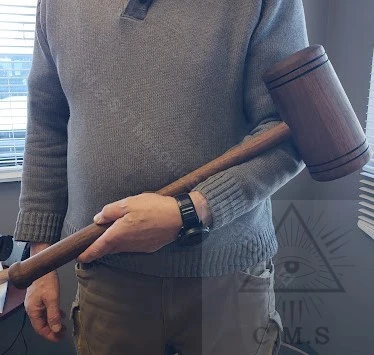
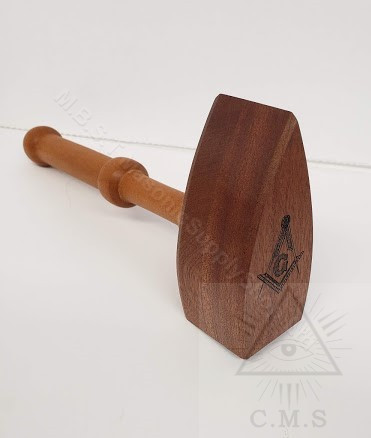
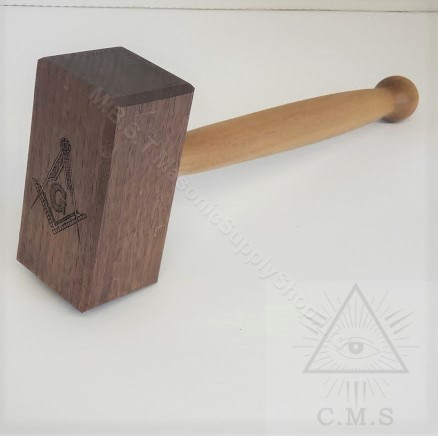
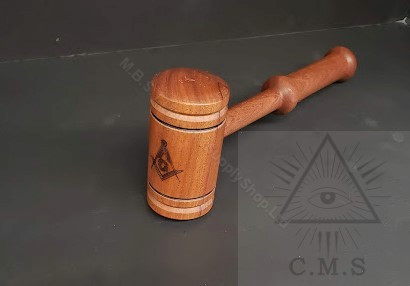
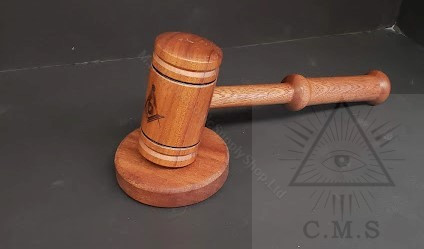
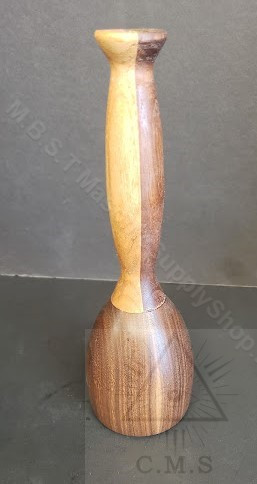
- Traditional mallet-style gavels with a turned head and handle are the most common Masonic gavel.
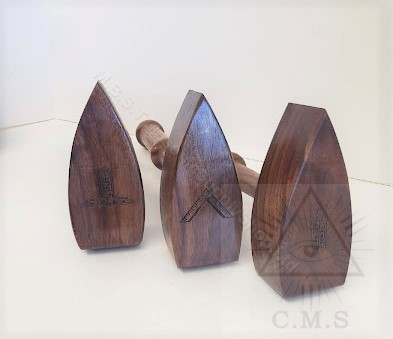
- Setting mauls are heavier and recall the operative mason's tool.
- Chairman's style gavels are slimmer and lighter for long meetings.
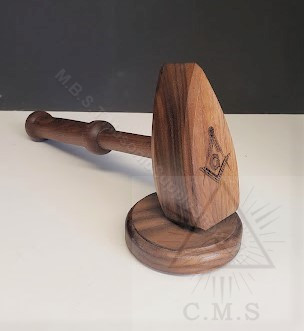
- Gavel and sounding block sets protect the pedestal and give a crisp knock.
- Matched sets of three equip the Master and both Wardens at once.
Choose a Masonic gavel that suits the size of your lodge room and the hand of the Brother who will use it.
Presentation gavels
Many Canadian lodges present an engraved gavel to the outgoing Master as a memento of his year. See our page on presentation gavels for wording ideas and timing.
Who buys the Masonic gavel?
In most lodges the gavels belong to the lodge and are bought from lodge funds or donated in memory of a Brother. Presentation gavels, by contrast, are personal gifts that the recipient keeps.
Caring for a gavel
- Wipe it after each meeting with a soft, dry cloth.
- Keep it out of damp storage. Wood can swell and crack.
- Apply a little furniture wax or oil once or twice a year to keep the finish healthy.
- Check that the head is tight on the handle. A loose head is a safety hazard.
Where to buy
The Canadian Masonic Supply Shop in Alberta carries Masonic gavels, including lodge gavels for the Master and Wardens.
FAQ
Is a Masonic gavel the same as a judge's gavel?
They look similar, but lodge gavels are often more substantial and may be shaped differently, depending on tradition.
Should each lodge officer have his own gavel?
Gavels usually belong to the lodge and pass to each new Master and Warden. Presentation gavels are personal keepsakes.
Can a gavel be engraved?
Yes. Most gavels can be engraved on a band or plate.